
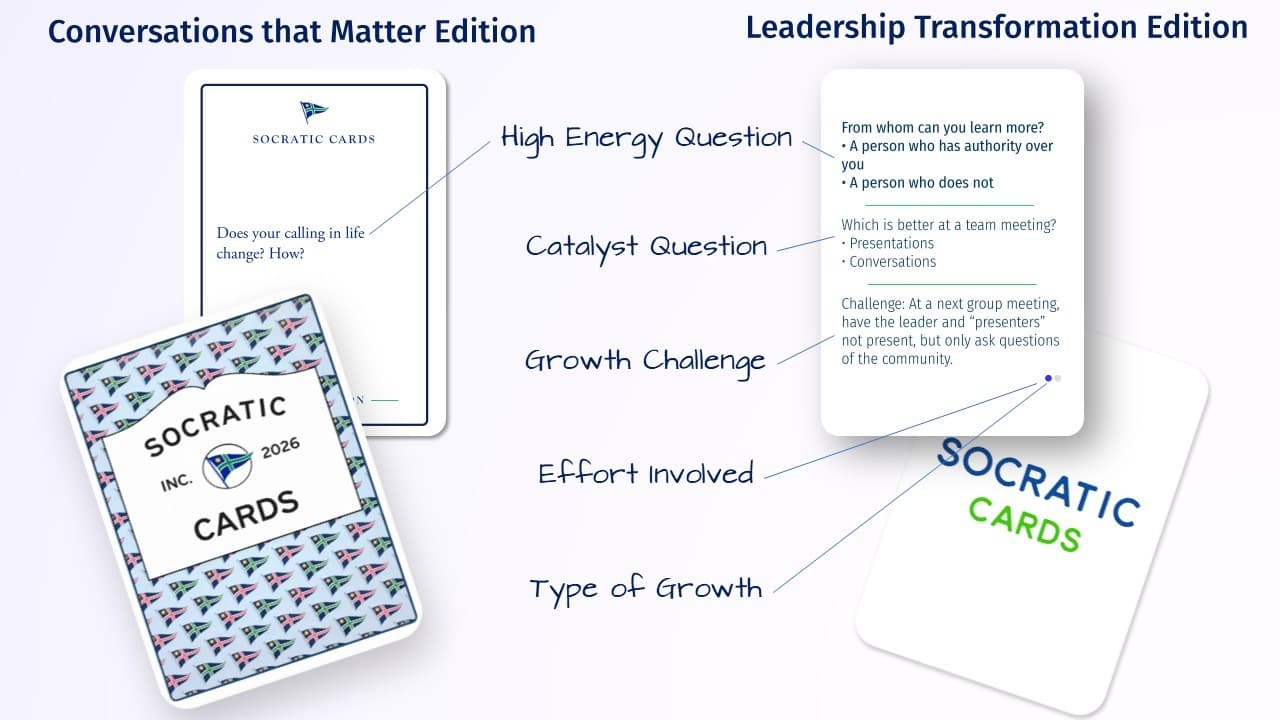

Most card games are built around quick answers, points, and competition. Socratic Cards by Clark Aldrich takes a very different approach by centering everything around thoughtful questions and real conversations. At its core, the game asks something simple but meaningful: “Who are you, and how can you matter more?”
Clark Aldrich has spent years creating over a hundred serious games and educational simulations for corporations and global organizations. His work has been featured by major media outlets, but Socratic Cards comes from a much more personal observation. As he puts it, “discussing a good Socratic question is a lot of fun, even more fun than answering trivial questions.” That idea became the foundation for a deck designed to spark conversations that actually matter.
How Socratic Cards Turn Questions Into Meaningful Conversations
The concept behind Socratic Cards is rooted in how people actually grow and learn. Clark explains that at the highest levels of organizations, progress does not come from “classrooms, tests, and teachers but questions, experiments, collaborations, and mentors.” With this deck, he wanted to bring that same experience into everyday life, whether you are with friends, coworkers, or spending time reflecting on your own.
Each card is quick to read but designed to go deeper. Clark notes that “it takes anyone about five seconds to read a Socratic Cards question,” but the reaction is what makes it memorable. People often pause because the question feels surprisingly personal. As he describes it, “they are taken aback by how relevant the question is to their life,” and that moment tends to repeat with every new card.
The Socratic Cards Design Process: Simple, Intentional, and Impactful
The structure of the deck is simple but carefully thought out. There are 100 cards, and each one includes a big question, a catalyst question, and a challenge. Getting to that final version took time. Clark originally created more than 200 cards before narrowing them down to the strongest set.
One of the biggest challenges was clarity. He explains that “editing the number of words down for each card, while still making each piece self-explanatory” was not easy. The goal was to make every card accessible at a glance while still leaving room for meaningful reflection.
Visually, the deck leans into a clean, text-based design. After experimenting with more detailed artwork, Clark chose to let the questions speak for themselves. The colors were selected to feel “tasteful and energetic,” making the deck versatile enough to fit into a corporate setting, classroom, dorm room, or living room.
Why Socratic Cards Work for Personal Growth and Group Play
One of the most rewarding parts of the experience is seeing how people react when they first interact with the cards. There is often a moment where a question really lands, followed by curiosity to keep going. Over time, the game becomes something more than just an activity.
Clark puts it best when he says, “it does turn life, their life, into a game where they can make progress on the journeys that matter most to them.” That shift is what makes Socratic Cards stand out. It works just as well for personal reflection as it does for group conversations, making it a flexible tool for connection.
This idea also ties into one of the core philosophies behind the deck: “Good leaders have good answers. Great leaders ask great questions.” By encouraging better questions, the game naturally leads to deeper and more meaningful discussions.
A Card Game That Helps You Disconnect From Screens
Another important part of the vision was creating a physical experience. In a world where so much interaction happens on screens, Socratic Cards offers a chance to slow down and reconnect.
Clark emphasizes that “a tentpole appeal of Socratic Cards is that people value taking a break from their screens, and reconnecting with each other.” Because of that, the quality and feel of the cards mattered. Partnering with Shuffled Ink allowed him to create a product that feels durable, well-made, and enjoyable to use over time.
Advice From the Creator of Socratic Cards

For anyone interested in creating their own card game, Clark keeps the advice practical and grounded. He explains that “you are in good shape if the core of your game is a short activity, less than ten seconds, that is just fun and addictive.” Once that core experience works, everything else can build from there.
Without that foundation, even the most detailed or creative ideas can fall flat. With it, a simple concept can become something people return to again and again.
What’s Next for Socratic Cards
Looking ahead, Clark plans to expand Socratic Cards with new decks and topics. He is also continuing to share the ideas behind the game through podcasts and writing, helping more people explore the impact of asking better questions in their daily lives.
His motto, “Play, Grow, Lead,” reflects the bigger picture. The goal is not just to create a game, but to create an experience that stays with people long after the cards are put away.
Where to Buy Socratic Cards
Website: www.socraticcards.com
Socratic Cards is a reminder that the right question, asked at the right time, can change the entire conversation.